Home Workout Routine For Busy Professionals For Busy Professionals
Published on December 17, 2025
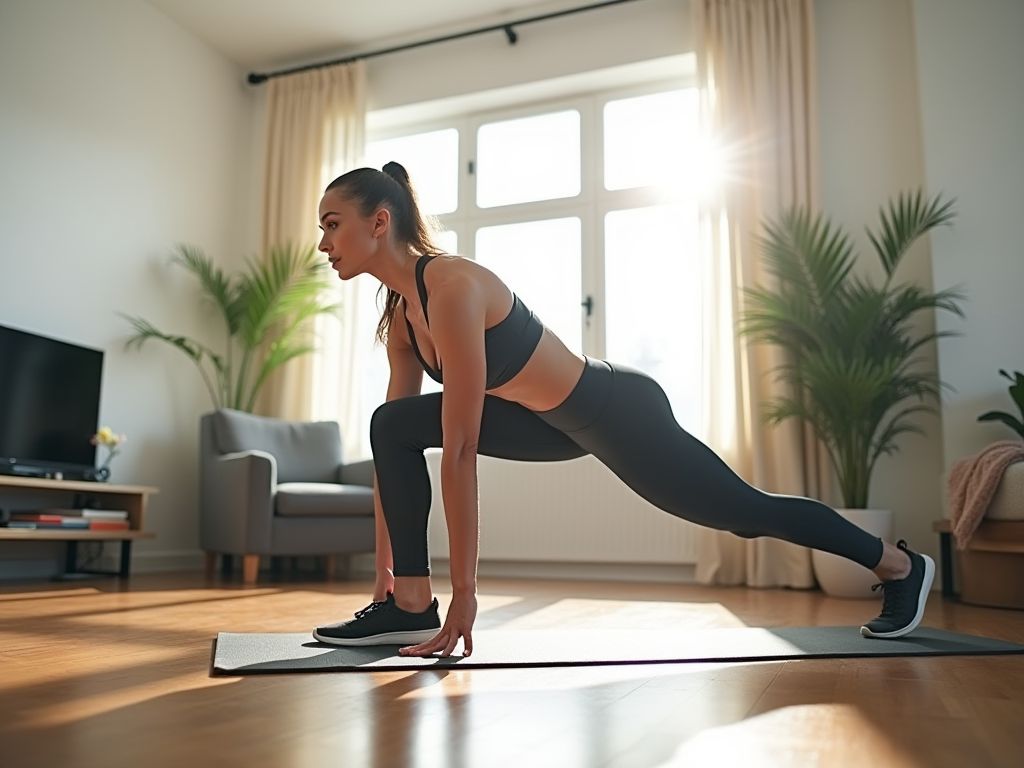
Home Workout Routine for Busy Professionals: Maximize Efficiency, Minimize Time
For busy professionals juggling meetings, deadlines, and family commitments, finding time to exercise can feel impossible. However, a well-structured home workout routine can deliver impressive results in as little as 20–30 minutes per day. This article provides science-backed strategies, exercises, and time-saving tips to help you stay fit without sacrificing productivity.
1. Start with a 5-Minute Warm-Up
A proper warm-up is non-negotiable. It increases blood flow to muscles, reduces injury risk, and prepares your body for physical exertion. Try this sequence:
- Jog in place for 2 minutes (or march if space is limited).
- Arm circles (10 forward, 10 backward).
- Leg swings (10 per leg).
- Dynamic stretches (e.g., lunges with a twist, high knees).
2. Full-Body Circuits for Time Efficiency
Full-body circuits combine strength and cardio, making them ideal for busy schedules. Perform 3–4 rounds of the following moves with 30 seconds of rest between rounds:
- Push-ups (modify on knees if needed).
- Bodyweight squats (add a jump for a cardio boost).
- Plank to downward dog (targets core and upper body).
- Burpees (adjust by omitting the jump if time is tight).
3. Strength Training: No Gym? No Problem
Home workouts can build muscle with bodyweight exercises or minimal equipment (e.g., resistance bands, dumbbells). Focus on compound movements:
- Deadlifts (use a kettlebell or water bottle for added resistance).
- Bent-over rows (use a towel or resistance band).
- Tricep dips (use a sturdy chair).
- Single-leg Romanian deadlifts (improve balance and lower-body strength).
4. HIIT Workouts for Maximum Burn
High-Intensity Interval Training (HIIT) is a time-efficient way to burn calories and boost metabolism. Try this 20-minute routine:
- 30 seconds of jumping jacks.
- 30 seconds of mountain climbers.
- 30 seconds of push-ups.
- 30 seconds of rest.
- Repeat the circuit 4–6 times.
5. Core Workouts: Strengthen Your Foundation
A strong core improves posture, reduces back pain, and enhances athletic performance. Incorporate these exercises 2–3 times per week:
- Planks (hold for 30–60 seconds, 3 sets).
- Leg raises (lie flat, lift legs to 90 degrees).
- Bicycle crunches (target obliques).
- Hollow body holds (engage core while lifting shoulders off the floor).
6. Flexibility and Mobility: Don’t Skip This
Flexibility prevents injuries and improves range of motion. Dedicate 5–10 minutes post-workout to stretching:
- Hamstring stretch (seated forward fold).
- Chest opener (clasp hands behind your back).
- Shoulder rolls (forward and backward).
- Cat-cow stretch (for spinal mobility).
7. Time Management: Fit Workouts Into Your Schedule
Busy professionals thrive on routine. Consider these tips:
- Schedule workouts like meetings (e.g., 6:30 AM or 7:30 PM).
- Use a timer to stay on track.
- Break workouts into shorter sessions (e.g., 10 minutes in the morning, 10 at night).
- Listen to a podcast or audiobook during workouts for productivity.
8. Nutrition: Fuel Your Body for Performance
Exercise alone isn’t enough. Pair your routine with smart nutrition:
- Consume protein within 30 minutes post-workout (e.g., eggs, Greek yogurt).
- Stay hydrated with water throughout the day.
- Include healthy fats (e.g., avocados, nuts) and complex carbs (e.g., quinoa, oats).
- Avoid processed foods and excessive sugar.
9. Rest and Recovery: The Secret to Progress
Overtraining can lead to burnout and injury. Prioritize recovery:
- Get 7–9 hours of sleep nightly.
- Take 1–2 rest days per week.
- Use foam rolling or self-massage to relieve muscle tension.
- Practice mindfulness (e.g., meditation, deep breathing) to reduce stress.
10. Stay Motivated: Accountability and Rewards
Maintaining consistency requires mental strategies:
- Track progress with a journal or app (e.g., MyFitnessPal, Fitbit).
- Set small, achievable goals (e.g., “Do 3 workouts this week”).
- Find a workout buddy (virtual or in-person).
- Reward yourself after milestones (e.g., a new outfit, a massage).
Frequently Asked Questions
Q1: How long should my home workouts be? A: Aim for 20–30 minutes, 3–5 times per week. Shorter sessions are better than skipping entirely.
Q2: Can I build muscle at home without equipment? A: Yes! Bodyweight exercises like push-ups, squats, and planks are effective for hypertrophy when performed with proper form and progressive overload.
Q3: How do I work out without a gym? A: Use your living room, kitchen, or even a park. Focus on compound movements and minimal equipment (e.g., resistance bands, dumbbells).
Q4: How do I avoid injury during home workouts? A: Prioritize proper form over intensity. Warm up thoroughly, avoid overexertion, and rest when needed. Consider online tutorials for technique guidance.
Conclusion: Your Health Is an Investment
For busy professionals, a home workout routine isn’t a luxury—it’s a necessity. By integrating efficient exercises, smart time management, and proper recovery, you can achieve fitness goals without compromising your career or personal life. Remember, consistency beats intensity. Start small, stay committed, and watch your health and productivity soar.
Scientific References & Medical Evidence
- "Effectiveness of home-based and remotely supervised aerobic exercise in Parkinson's disease: a double-blind, randomised controlled trial." (2019) View study on PubMed.gov →
- "Does exercise intensity matter for fatigue during (neo-)adjuvant cancer treatment? The Phys-Can randomized clinical trial." (2021) View study on PubMed.gov →
CureCurious verifies facts through peer-reviewed research.
You might also like


Recommended for your journey
We've handpicked this top-rated health tool to help you achieve the results discussed in this article.
Check Price on Amazon*As an Amazon Associate, CureCurious.com earns from qualifying purchases. This helps us keep our research free for everyone.

Written by Mark Davies
Certified Fitness Coach
"Mark is a certified strength and conditioning specialist (CSCS). He helps people build sustainable fitness habits and recover from sports injuries."